

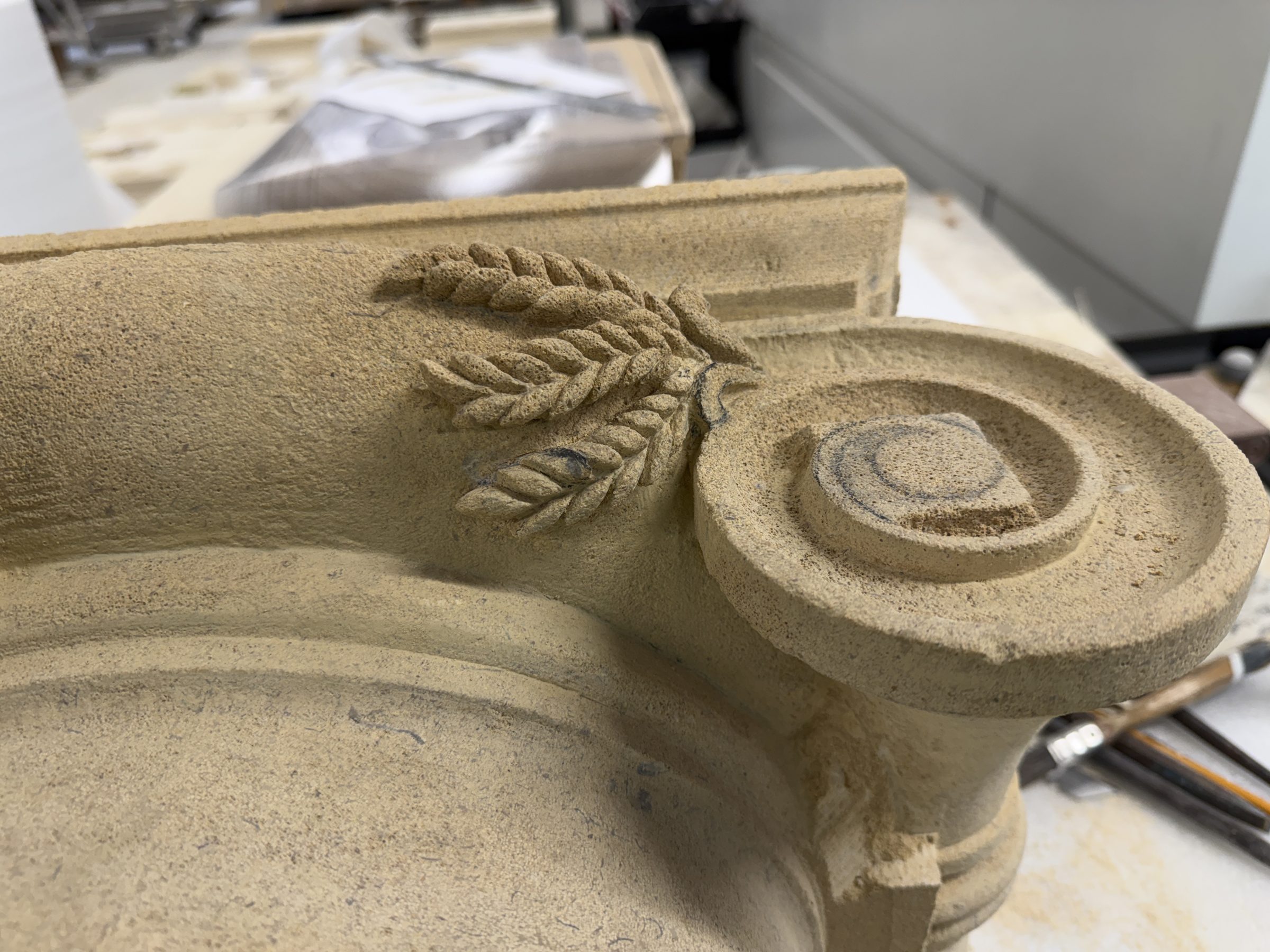
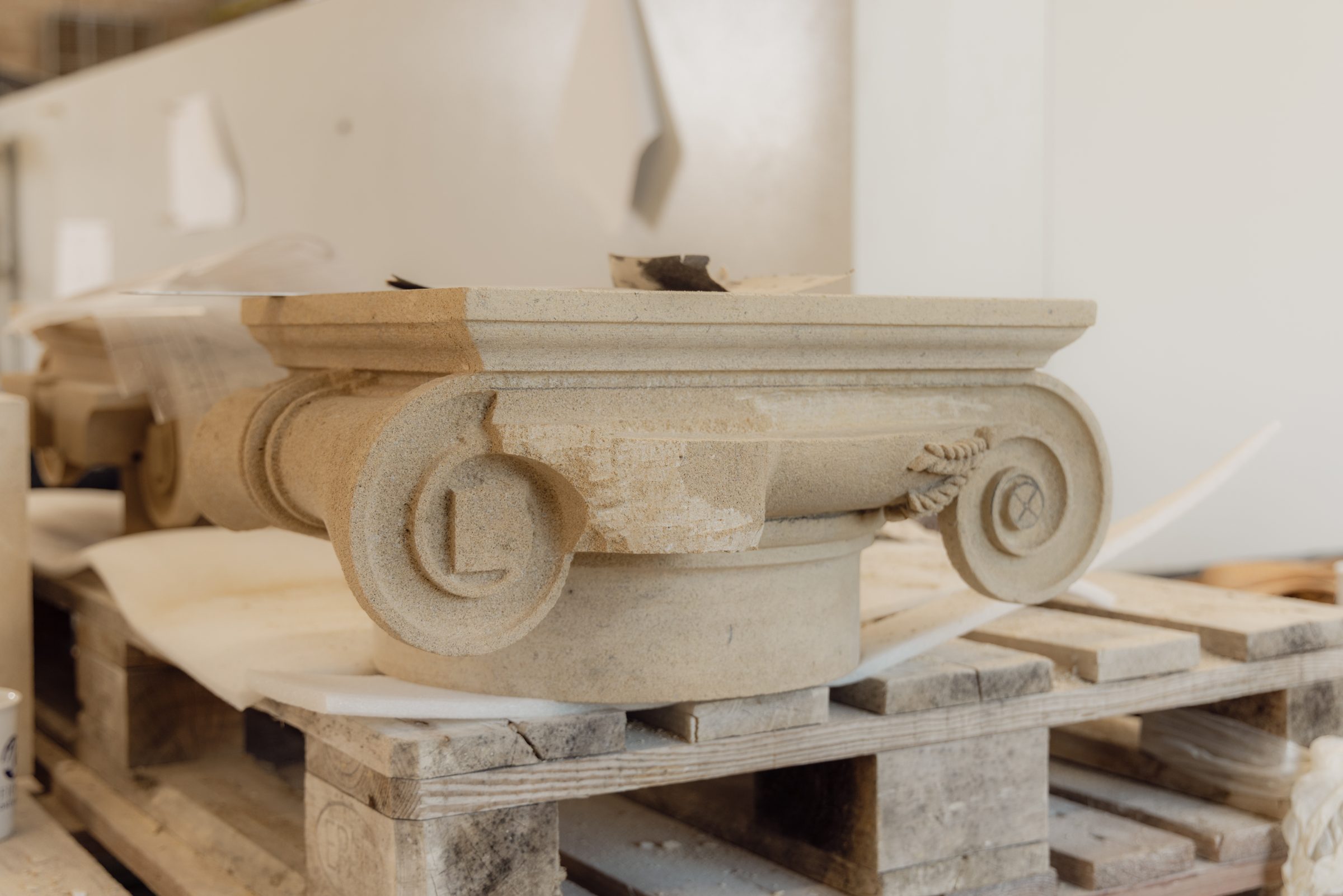
A commission in the workshop at the moment asks for something we do not see every day: an Ionic capital in Bath stone, with wheatsheafs worked into the volutes. It is a small piece of carving in the scheme of a building. It is also a good illustration of how carved stone is made here, because every part of the process has to agree before a chisel touches the block.
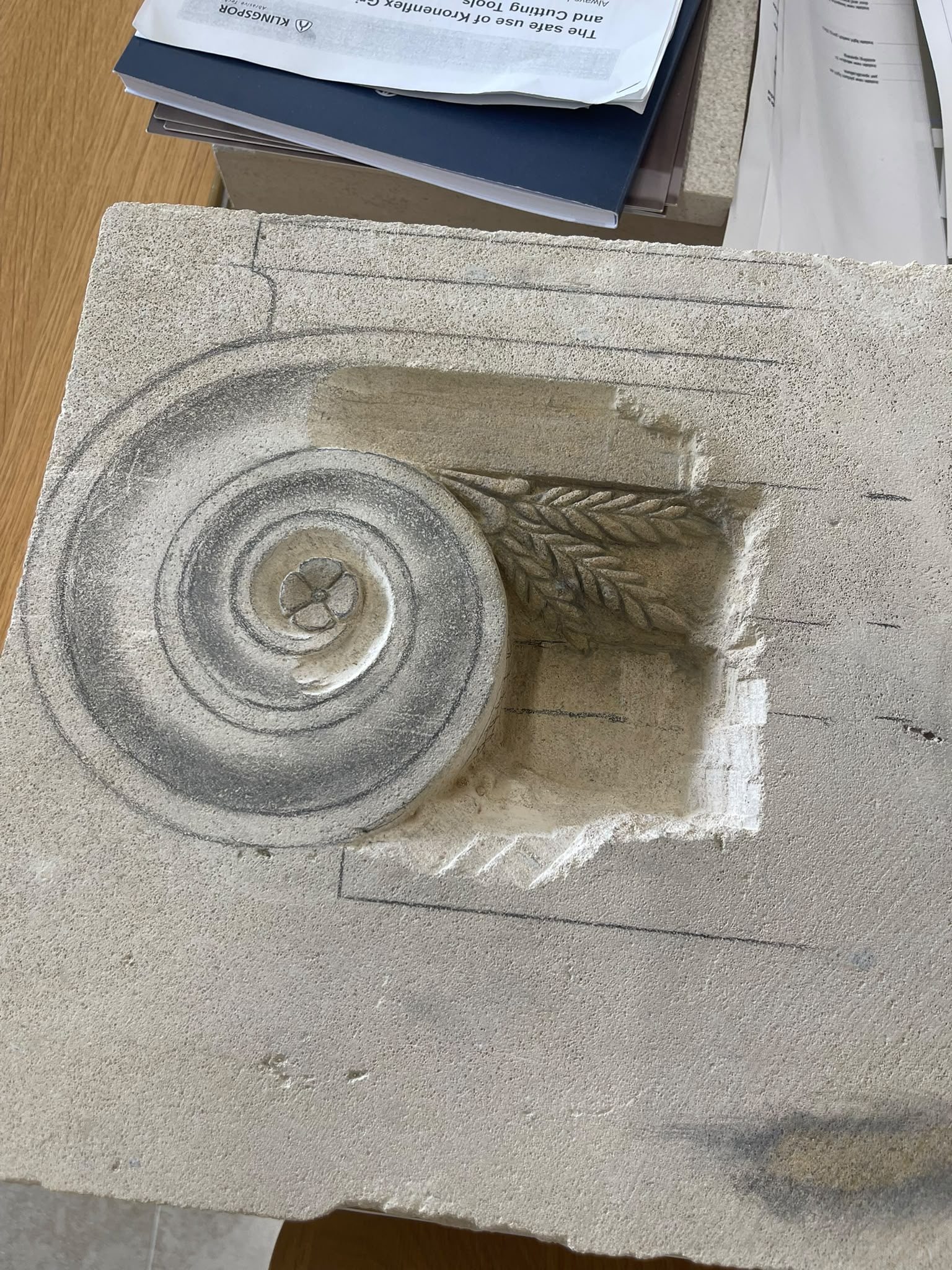
Start with the order
An Ionic capital is not invented each time. Its proportions were set out centuries ago, and the volute, the spiral scroll at each corner, follows a geometry that has been drawn and redrawn ever since. We begin there. The workshop keeps drawings of capitals we have carved before, some of them recent, some of them old, and the first job is to fix the geometry: the diameter of the column, the height of the capital, the eye of the volute, the spacing of the egg-and-dart beneath it.
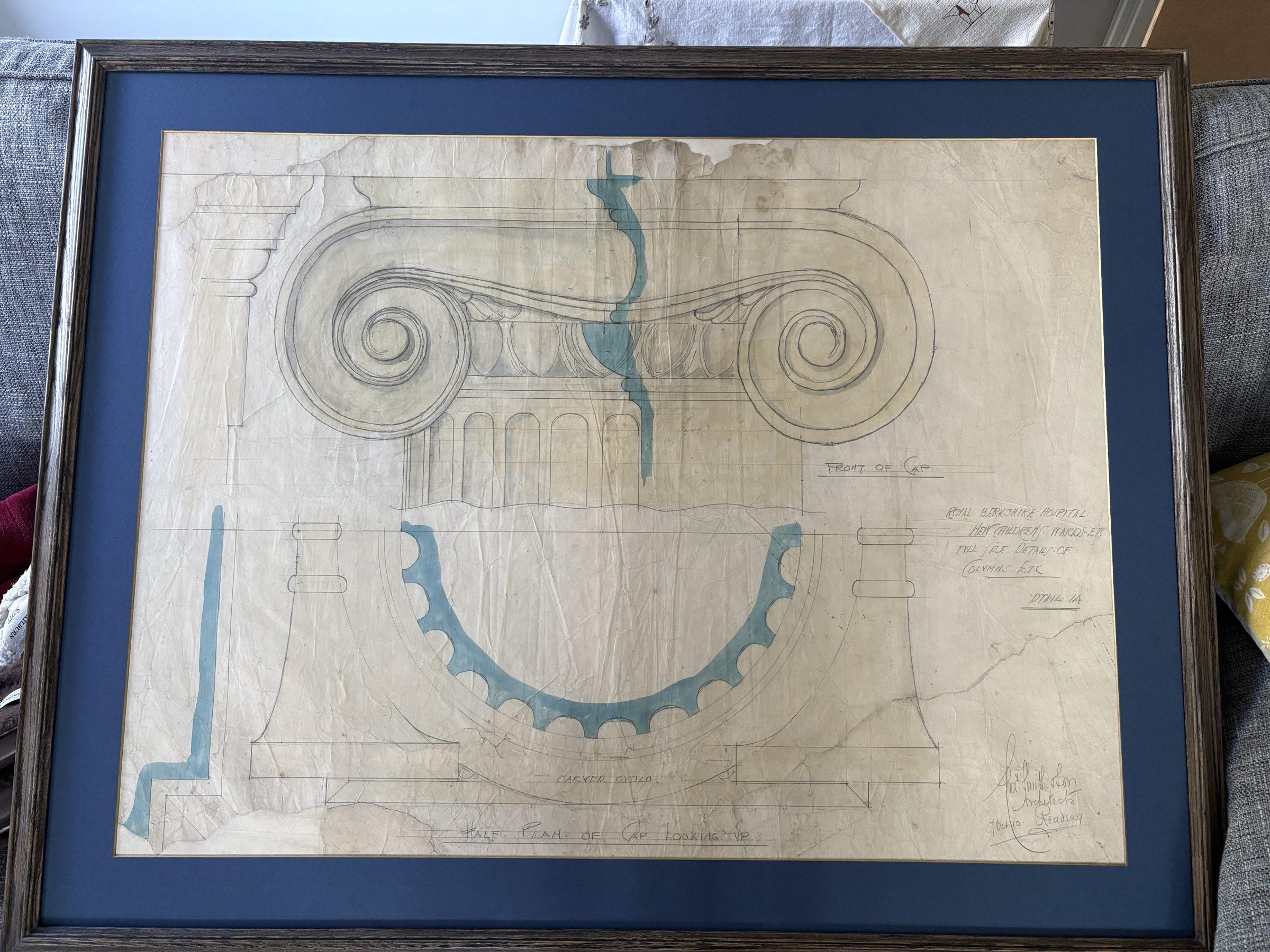
That is the architecture of the piece: the historical forms of the orders, and the geometric shapes that hold them together. Get this wrong and the capital will look wrong from across the street, however well it is carved.
Then make it unique
The wheatsheafs are what make this capital this client’s capital. They sit within the volutes, replacing the plain spiral face with something that means something to the building. This is the art in the work. It is drawn by hand first, over the geometry, so that the sheaf belongs to the scroll rather than sitting on it.
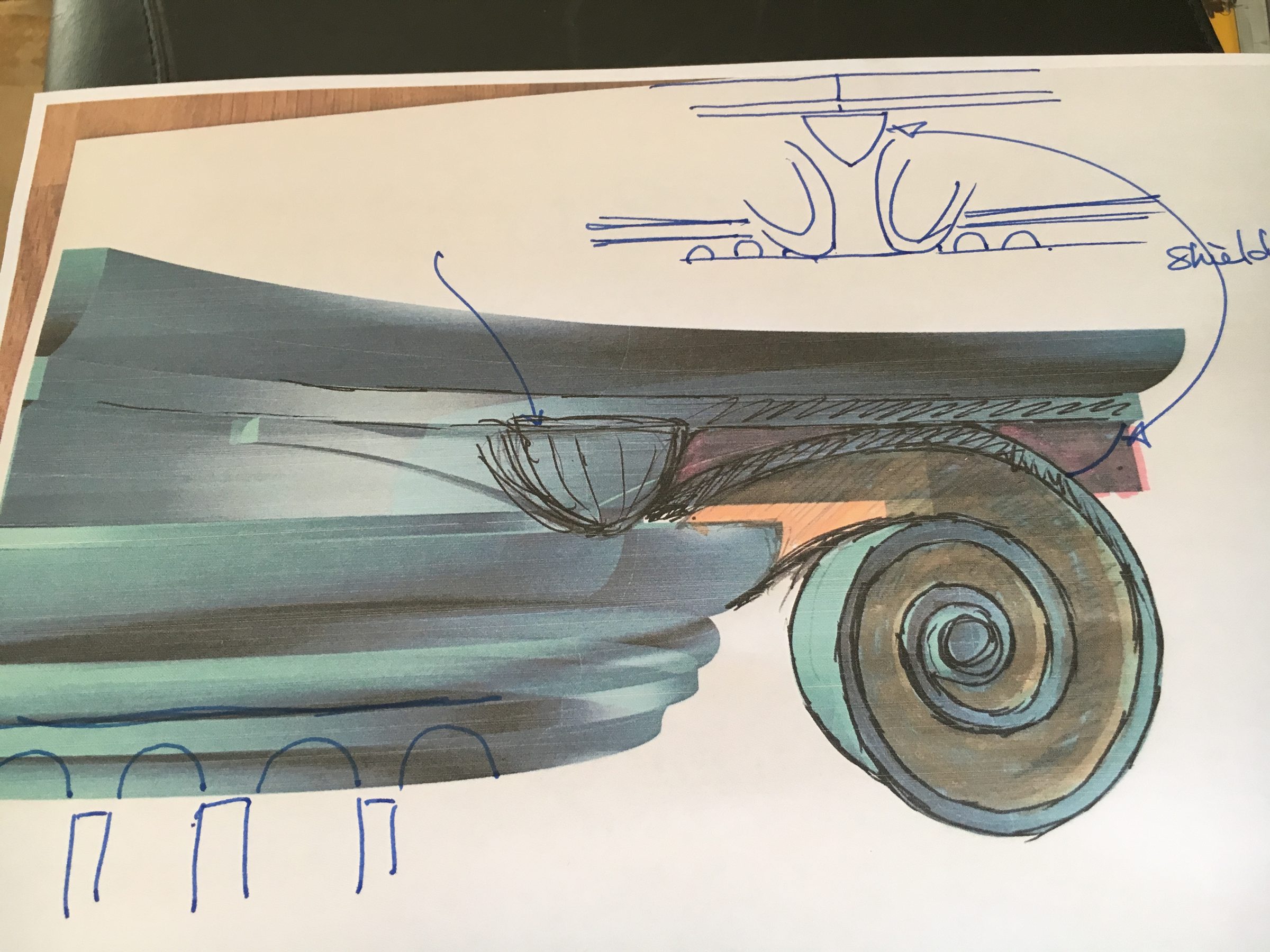
Model it before you cut it
The third part is the science. The capital is built as a three-dimensional model so that every surface, the spiral, the return of the volute at the corner, the undercut of the sheaf, is resolved before production. From that model we make a 1:20 print for the client and the architect to hold and turn over, well ahead of the full-size work. Changes are cheap at this stage. They are not cheap once a block of Bath stone has been cut.
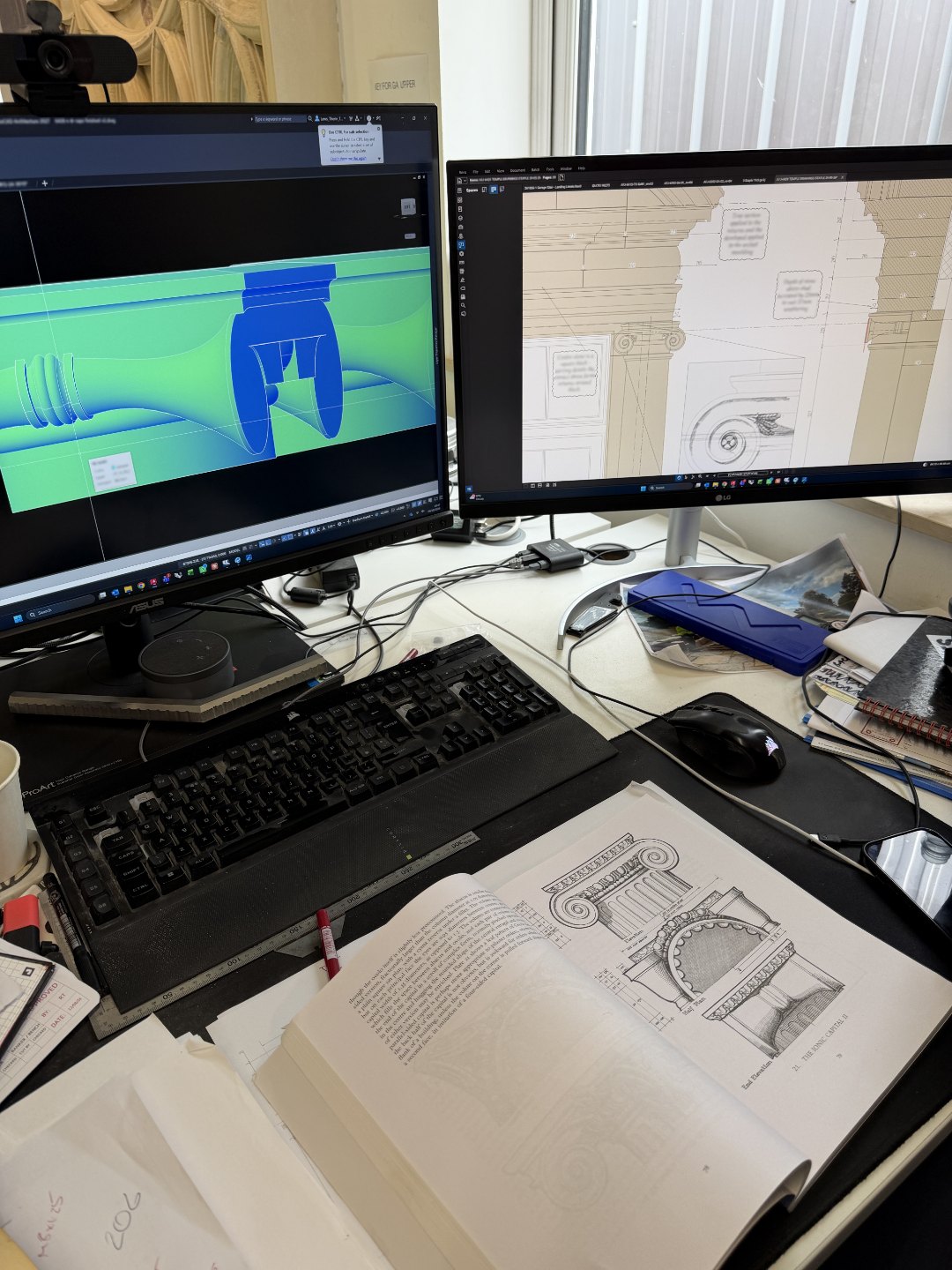
The model then guides the machining of the block to its main shape, and the carver takes over for everything the machine cannot do: the sheaf, the eye of the volute, the crispness of the arises, the soft edges where weather and shadow will do their work.
Why all three matter
Angus Jones puts it this way: the art is in the unique, the architecture is in the geometric shapes and the historical forms of the orders, and the science is in the three-dimensional formation of the shape. Combining the three gives the best solution all round. From every perspective, the work comes out right, and the journey is a good one for the workshop too.
Work like this rarely stands on its own. It sits inside the larger projects we take on: porticos, facades, staircases and whole estates, where the carved detail is one part of a much bigger piece of stonework designed, made and installed by the same team.
If you are planning a project of that kind, have a look at our architectural stonemasonry and recent projects, or get in touch to visit the workshops and see the work in progress.