
Architectural Natural Stone Porticos Natural Stone Facades Stone Carving
View all
Interior Bespoke Stone Surfaces Natural Stone Flooring Stone Fireplaces
View all
Heritage Natural Stone Conservation Natural Stone Restoration Design & Consultancy
View all
Structural Cantilevered Staircases Post Tensioned Staircases Design & Consultancy
View all

Featured Project

Knighton Mill

A contemporary new-build where glass and flint meet traditionally detailed Bath stone ashlar and a robust gritstone plinth.

Explore project

Selected Projects

High Beeches The Belvedere The Castle Lutyens Surrey Property
View all projects

About AFJONES

Six generations of knowledge and an unbroken commitment to doing things properly. That is what every client inherits when they work with AFJONES.

About AFJONES
Our Story Our History Project Delivery Sustainable Stonemasonry

Est. 1858  ·  Ipsden, Oxfordshire

Our People Our Team Our Values Careers & Apprenticeships

Resources

Knowledge built from six generations of stonemasonry.

Guides, articles and education to inform every stage of your stone project — from material selection to on-site delivery.

Explore resources
Knowledge Articles & Guides Materials Guide
Our Work Projects Services

A Wheatsheaf in the Capital: Carving an Ionic Order in Bath Stone

27 November 2026  ·  The Directors' Cut

A commission in the workshop at the moment asks for something we do not see every day: an Ionic capital in Bath stone, with wheatsheafs worked into the volutes. It is a small piece of carving in the scheme of a building. It is also a good illustration of how carved stone is made here, because every part of the process has to agree before a chisel touches the block.
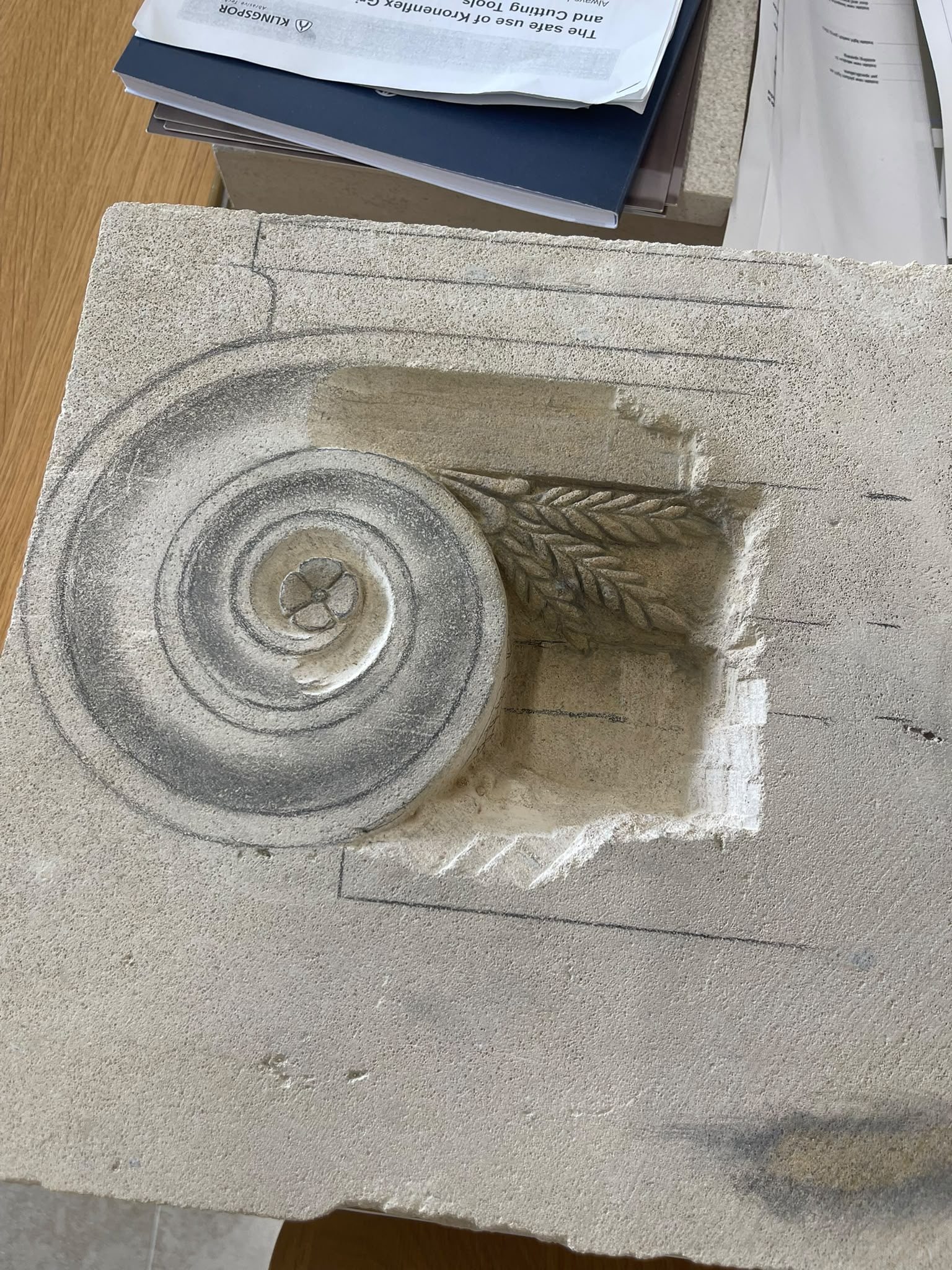
A trial carving of the volute and wheatsheaf in a block of Bath stone, with pencil setting-out lines
A trial of the volute and wheatsheaf carved into a block of Bath stone, with the setting-out drawn on in pencil.

Start with the order

An Ionic capital is not invented each time. Its proportions were set out centuries ago, and the volute, the spiral scroll at each corner, follows a geometry that has been drawn and redrawn ever since. We begin there. The workshop keeps drawings of capitals we have carved before, some of them recent, some of them old, and the first job is to fix the geometry: the diameter of the column, the height of the capital, the eye of the volute, the spacing of the egg-and-dart beneath it.
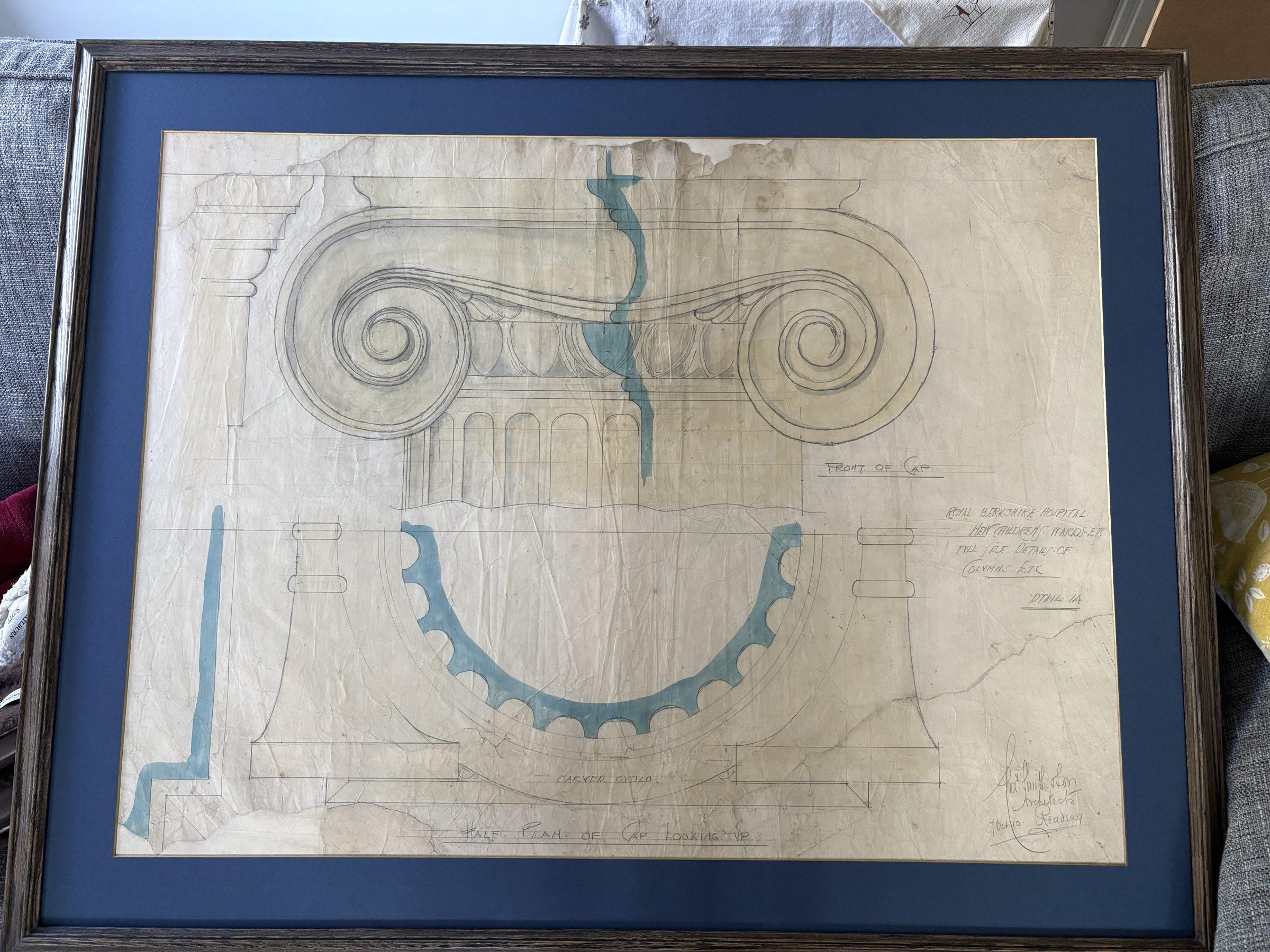
A framed historic drawing of an Ionic capital, the volute set out in pencil with the egg-and-dart picked out in blue
A full-size architect’s drawing of an Ionic capital for the Royal Berkshire Hospital, kept in the workshop.

That is the architecture of the piece: the historical forms of the orders, and the geometric shapes that hold them together. Get this wrong and the capital will look wrong from across the street, however well it is carved.

Then make it unique

The wheatsheafs are what make this capital this client’s capital. They sit within the volutes, replacing the plain spiral face with something that means something to the building. This is the art in the work. It is drawn by hand first, over the geometry, so that the sheaf belongs to the scroll rather than sitting on it.
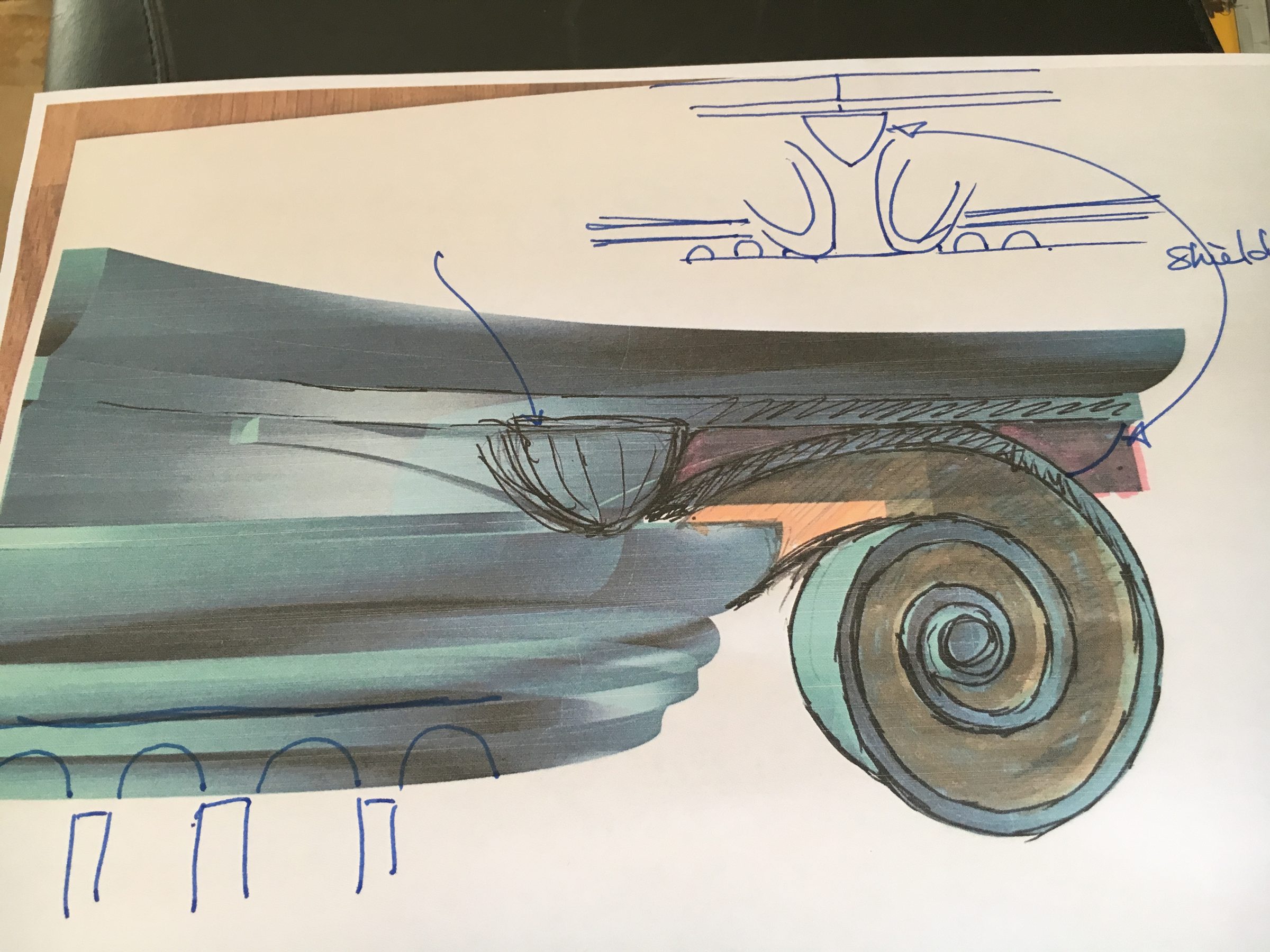
A pencil and pen sketch of the volute with the wheatsheaf drawn over a printed capital
The wheatsheaf drawn by hand over the volute before the capital is modelled.

Model it before you cut it

The third part is the science. The capital is built as a three-dimensional model so that every surface, the spiral, the return of the volute at the corner, the undercut of the sheaf, is resolved before production. From that model we make a 1:20 print for the client and the architect to hold and turn over, well ahead of the full-size work. Changes are cheap at this stage. They are not cheap once a block of Bath stone has been cut.
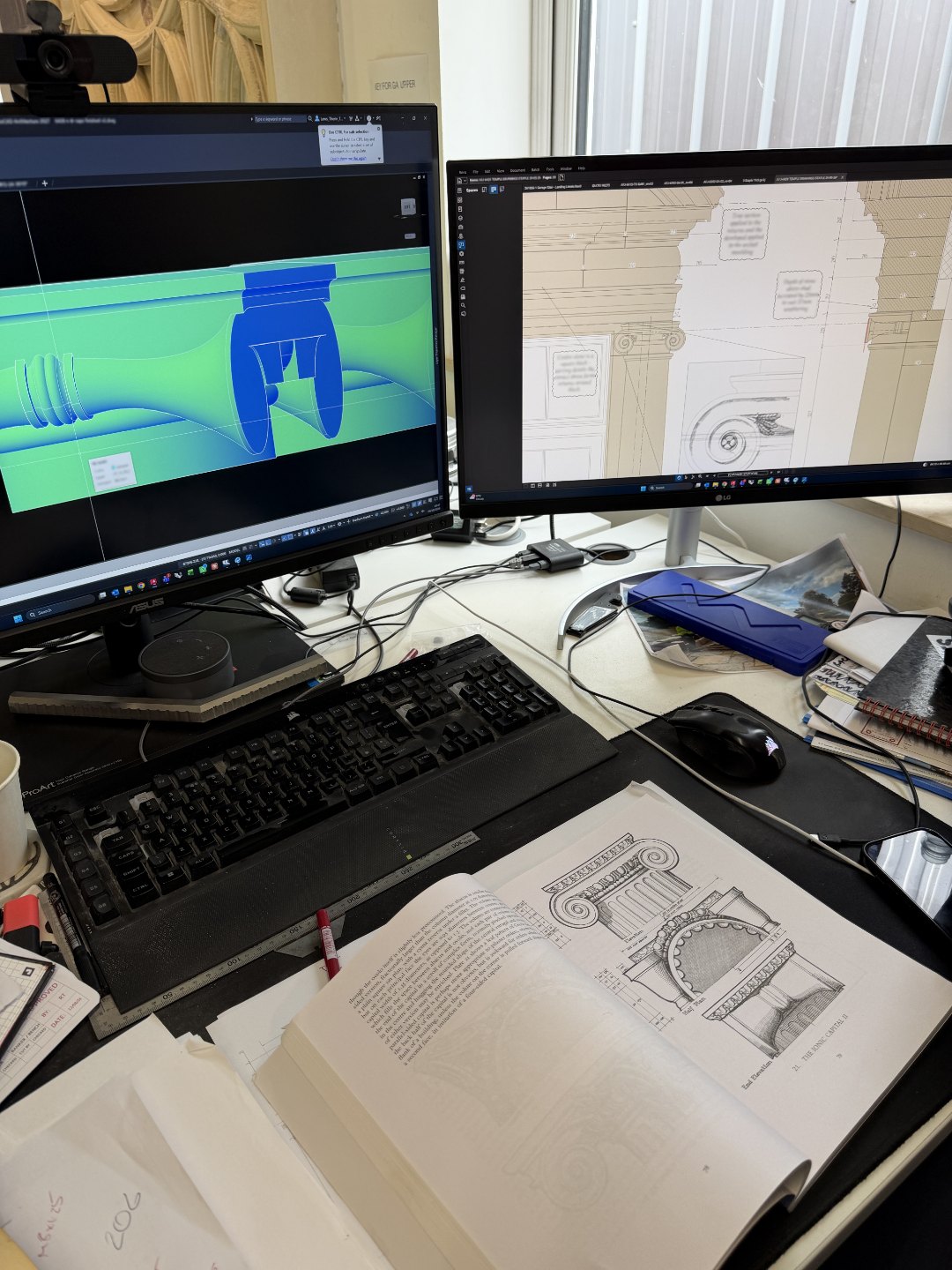
The capital modelled in three dimensions on screen, with the reference drawings and books open alongside
The three-dimensional model of the capital on screen, with the drawings and reference books alongside.

The model then guides the machining of the block to its main shape, and the carver takes over for everything the machine cannot do: the sheaf, the eye of the volute, the crispness of the arises, the soft edges where weather and shadow will do their work.
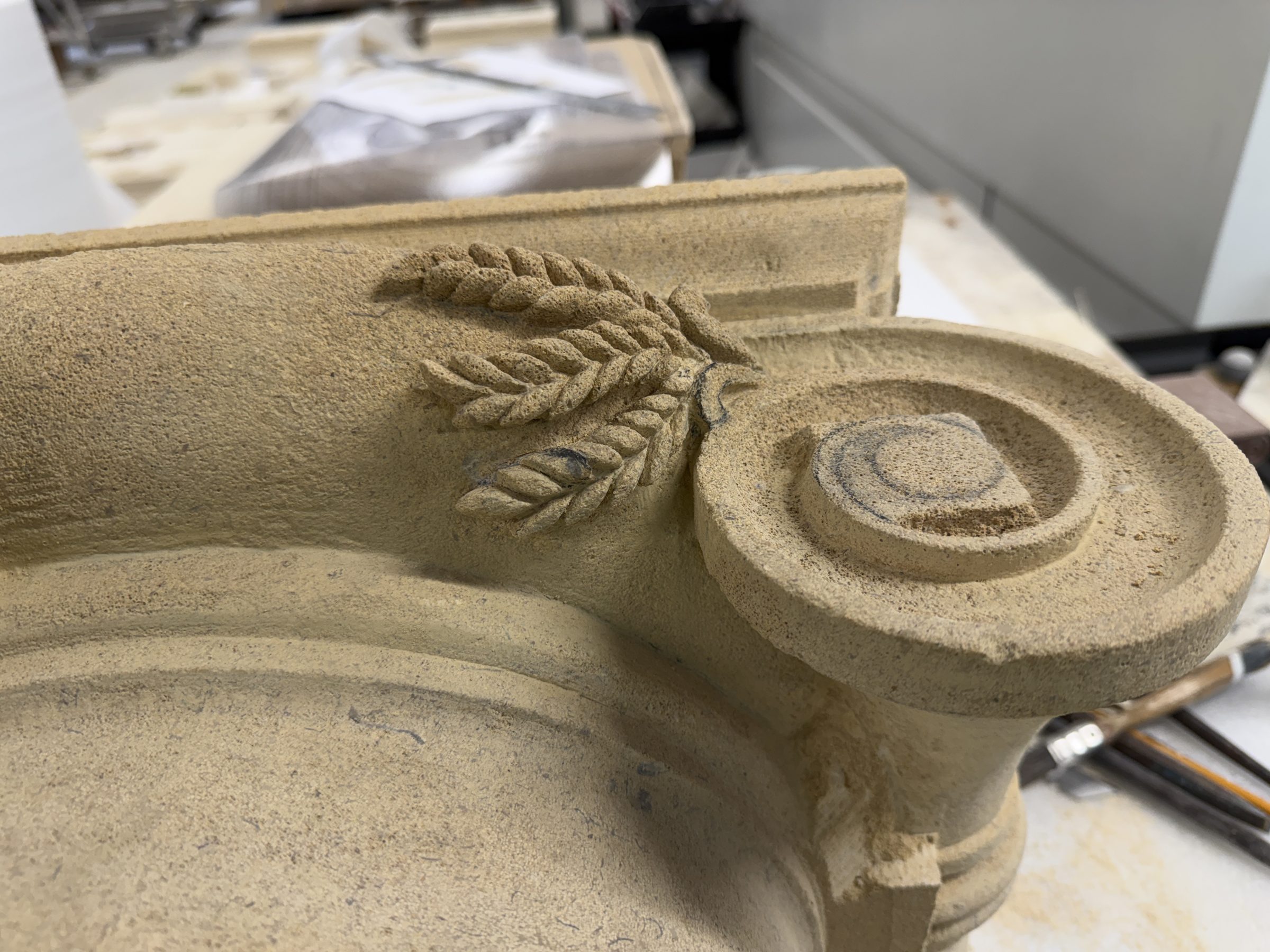
Close detail of the carved wheatsheaf against the volute, in fresh Bath stone
Hand carving on the wheatsheaf after the block has been machined to its main shape.

Why all three matter

Angus Jones puts it this way: the art is in the unique, the architecture is in the geometric shapes and the historical forms of the orders, and the science is in the three-dimensional formation of the shape. Combining the three gives the best solution all round. From every perspective, the work comes out right, and the journey is a good one for the workshop too.
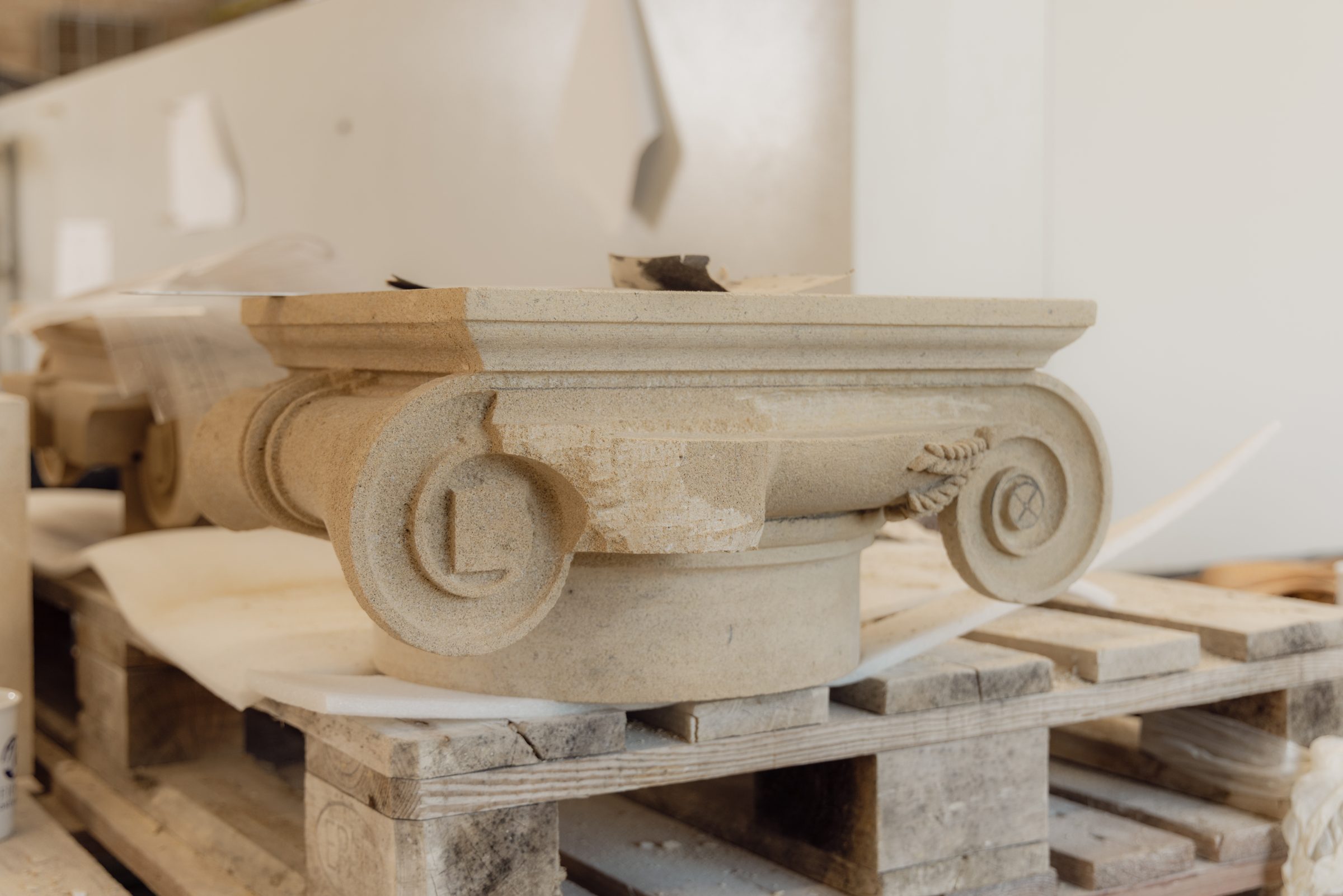
An Ionic capital in Bath stone part-way through carving, on a pallet in the AFJONES workshop
The capital after machining, with the wheatsheaf roughed out in one volute and the hand carving still to come.

Work like this rarely stands on its own. It sits inside the larger projects we take on: porticos, facades, staircases and whole estates, where the carved detail is one part of a much bigger piece of stonework designed, made and installed by the same team.

If you are planning a project of that kind, have a look at our architectural stonemasonry and recent projects, or get in touch to visit the workshops and see the work in progress.

Get in Touch

Start a
Conversation

Tell us about your project and one of our team will come back to you within one working day. Early advice on stone selection, structure and budget is always free.

Your details are kept private. We never share your information.

Download the guide

To view this resource or guide, please enter your details below.

Download starts immediately upon successful submission

We’ll never sell your data. By submitting you agree to be contacted about this enquiry.